Saturday, April 11, 2009

IMPORTANT NOTICE FROM STACY

Presently I am marking term 1 industry blog. There are a surprising number of posts missing- list as follows. All of these posts need to be completed to pass unit. In some cases I may have overlooked a post, my apologies. Please show me post and I will mark accordingly. These need to be completed by the commencement of term 2 so marks can be recorded.Thankyou.
post 1: 5 brands
post 2: ethics for a designer
katrina
post 3: subcultures
kyle- resubmit
candy
katrina
jade
rachel
post 4: graffitti
hayley
rachel
oriel
julie
chantel
candy
candice
emma
eddy- resubmit
post 5: cradle to cradle
oriel
miranda
jade
candy
kyle
chantel
hayley
clare
christopher
cien
candice
rachel
bronson
emma

Tuesday, April 7, 2009

graffiti-eddy


graffiti is a type of art that has developed over time to become a street type of art that many people do illegally and many people think is unclean and dirty rude art because they do not understand that most graffiti means something and is done for a reason . it is people expressing there feelings about things . graffiti is becoming easier to do because they have better technics and can just simple draw something on paper and glue it to the wall now making it easy and quick . there are many different types of graffiti and some is nice and some is not like i think tagging isn't the best but i really like the characters some people draw
Vandalizm? Street art!
Worth a Walk!

Union street melbourne


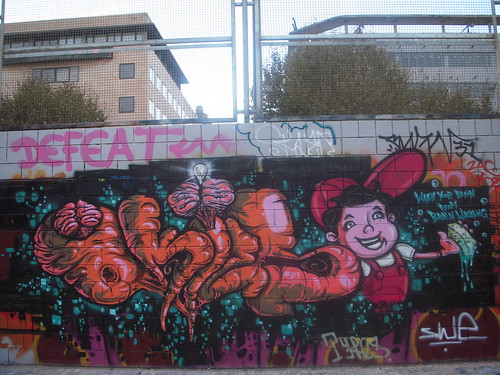
In many ways viewing graffiti art on the street, is much like viewing contemporary art in a gallery. It can reflect the graffiti writer's political or social views on society, those who study graffiti can decipher its crytical letters and complex multi layered messages. Many argue that graffiti causes fear but this fear is generated because of the passerby's inabiltity to read the letters or understand the artworks. Most graffiti artists, espesialy post graffitru artisits claim that their work should make people stop and think, however unlike in a museum or a gallery, there is no one on the street to provide an interpretation.

Cradle-to-grave
Cradle-to-grave is the full Life Cycle Assessment from manufacture ('cradle') to use phase and disposal phase ('grave'). For example, trees produce paper, which is recycled into low-energy production cellulose (fiberised paper) insulation, then used as an energy-saving device in the ceiling of a home for 40 years, saving 2,000 times the fossil-fuel energy used in its production. After 40 years the cellulose fibers are replaced and the old fibres are disposed of, possibly incinerated. All inputs and outputs are considered for all the phases of the life cycle.
Bag made from recycled paper


Cradle-to-Cradle
Cradle-to-cradle is a specific kind of cradle-to-grave assessment, where the end-of-life disposal step for the product is a recycling process. From the recycling process originate new, identical products (e.g., glass bottles from collected glass bottles), or different products (e.g., glass wool insulation from collected glass bottles).
Glass wool made from glass bottles


Julie Post 4_Graffiti Art


http://www.huntfor.com/arthistory/C20th/graffiti.htm


Graffiti is a type of deliberate marking on property, both private and public. It can take the form of pictures, drawings, words, or any decorations inscribed on any surface usually outside walls and sidewalks. When done without the property owner's consent, it constitutes illegal vandalism.

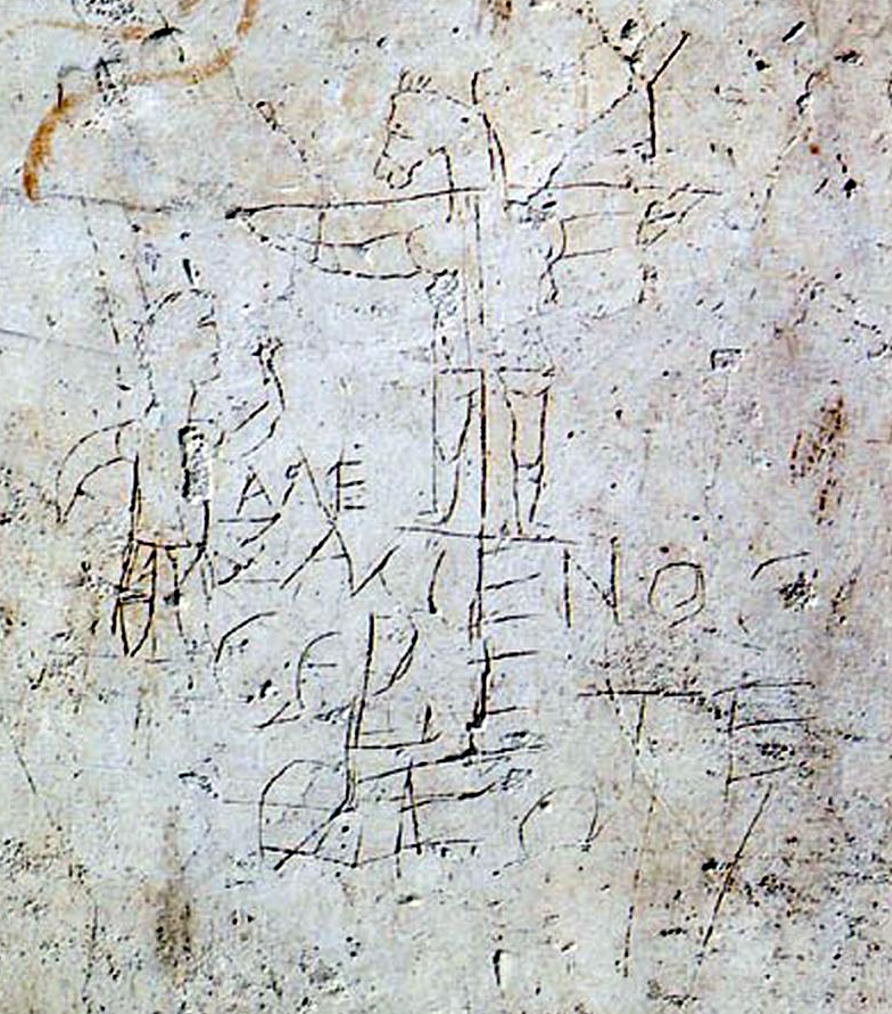
Graffiti has existed at least since the days of ancient civilizations. Graffiti originally was the term used for inscriptions, figure drawings, etc., found on the walls of ancient sepulchers or ruins, as in the Catacombs, or at Pompeii

In the modern era, in early 1970s young New Yorkers, belonging to the black and Puerto Rican communities, started to adopt tags - signatures and signs made with aerosol sprays and markers in public places. Tags started to cover the city's walls, buses and, above all, subway trains, with spectacular "whole car" works covering entire trains. Tags, like screen names, are sometimes chosen to reflect some qualities of the writer. Some tags also contain subtle and often cryptic messages.

The first modern identified tagger in New York was Taki. The Greek-American artist signed himself Taki 183 (probably the number of his apartment block). At the same time the "grafs" also made their appearance. These were real urban frescoes painted with spray-paint. Futura 2000, Dust and Pink all earned recognition and fame, although their celebrity was limited to the hip-hop culture and its circles.

Basquiat and Haring also started to work in the street and the subway, but the renown and repute of their work would very swiftly spread beyond the works of graffiti. Their works won instant critical acclaim and attracted the attention of influential art dealers. In no time they were in great demand. Their art was one of the rare forms to circulate freely through all social strata and attract enthusiasm from all sorts of people who were usually marked more by the abysses between them.

The difference between tagging and graffiti is arguable, but some say it's a clear one: tagging is gang-motivated and/or meant as vandalism (illegal) or viewed as too vulgar or controversial to have public value; while graffiti can be viewed as creative expression, whether charged with political meaning or not.

The above quote comes from the www.huntfor.com website.

My view

Important Historical Records are written down either in picture or letter form and the older these records are, the more valuable they become! Whether the medium is primitive as in cave drawings or more refined as etched into gold coins, these markings speak to us about Mankind's 'journey through time'.

I personally believe that human beings are creative by nature and the desire to draw and express ideas and emotions is inbuilt. Without this important aspect, our knowledge of history would be greatly lacking.


Above Image accessed from Ebay.com

Civilizations are often depicted by a single image unearthed in a dig, for example a famous mosaic of a woman from Pompeii is often used as a quick symbol to recognize that era.


In many European countries Graffiti Art is accommodated.
A graffiti Artist is commissioned to paint on a building, which often becomes a tourist attraction, then after awhile another Artist is commissioned to replace it with another work. These works are photographed and filmed from beginning to end, so they are in that sense living on long after they have gone! I think this should be the norm everywhere so great artists will continue to emerge as time rolls on.


The question of 'Political Propaganda' and 'Domination of a Population' now comes into question. Unfortunately there are evil people on this earth whose hunger for Power knows no bounds, these corrupt people will use this type of creativity to achieve their own goals. An appreciation of creativity does not underline their motives but simply a lust for power, punctuated by fanaticism or delusion.


Hilter now comes to mind, or China's Mao where their message has been against artistic and creative endeavor, while all along they're using artistic graffiti to push their own agendas, that of 'gaining power over the masses'.


Unknown Graffiti Artist

Scrawl is another great website dedicated to Artwork from the streets around the world, including Canada, Germany, Italy, Switzerland, UK, Spain, Nicaragua and USA.

http://www.graffitinet.com

http://www.dahub.com.au/

http://www.graffiti.org/index/best.html


POST 4: Lulu: Graffiti


*** Graffiti ***
(singular: graffito; the plural is used as a mass noun) is the name for images or lettering scratched, scrawled, painted or marked in any manner on property. Graffiti is sometimes regarded as a form of art and other times regarded as unsightly damage or unwanted.

vandalism...?

History of Graffiti
The term graffiti referred to the inscriptions, figure drawings, etc., found on the walls of ancient sepulchers or ruins, as in the Catacombs of Rome or at Pompeii. Usage of the word has evolved to include any graphics applied to surfaces in a manner that constitutes vandalism.
The only known source of the Safaitic language, a form of proto-Arabic, is from graffiti: inscriptions scratched on to the surface of rocks and boulders in the predominantly basalt desert of southern Syria, eastern Jordan and northern Saudi Arabia. Safaitic dates from the 1st century B.C. to the 4th century A.D..


The first known example of "modern style" graffiti survives in the ancient Greek city of Ephesus (in modern-day Turkey). Local guides say it is an advertisement for prostitution. Located near a mosaic and stone walkway, the graffiti shows a handprint that vaguely resembles a heart, along with a footprint and a number. This is believed to indicate that a brothel was nearby, with the handprint symbolizing payment.[2]


(right) Ancient Pompeii graffito caricature of a politician.

The ancient Romans carved graffiti on walls and monuments, examples of which also survive in Egypt. The eruption of Vesuvius preserved graffiti in Pompeii, including Latin curses, magic spells, declarations of love, alphabets, political slogans and famous literary quotes, providing insight into ancient Roman street life. One inscription gives the address of a woman named Novellia Primigenia of Nuceria, a prostitute, apparently of great beauty, whose services were much in demand. Another shows a phallus accompanied by the text, 'mansueta tene': "Handle with care".

Disappointed love also found its way onto walls in antiquity:

Quisquis amat. veniat. Veneri volo frangere costas
fustibus et lumbos debilitare deae.
Si potest illa mihi tenerum pertundere pectus
quit ego non possim caput illae frangere fuste?

"Whoever loves, go to hell. I want to break Venus's ribs
with a club and defor
m her hips.
If she can break my tender heart
why can't I hit her over the head?"
-CIL IV, 1284.


MODERN GRAFFITI
Graffiti is often seen as having become intertwined with hip hop culture and the myriad of international styles derived from New York City Subway graffiti. However, there are many other instances of notable graffiti this century. Graffiti has long appeared on railroad boxcars. The one with the longest history, dating back to the 1920s and continuing into the present day, is Bozo Texino. 

During World War II and for decades after, the phrase "Kilroy was here" with accompanying illustration was widespread throughout the world, due to its use by American troops and its filtering into American popular culture. Shortly after the death of Charlie Parker (nicknamed "Yardbird" or "Bird"), graffiti began appearing around New York with the words ‘Bird Lives.’[9] In the sixties American graffiti proclaiming that "Yossarian lives!",[citation needed] was briefly popular, a reference to the protagonist of Joseph Heller's novel, Catch-22. The student protests and general strike of May 1968 saw Paris bedecked in revolutionary, anarchist, and situationist slogans such as L'ennui est contre-révolutionnaire ("Boredom is counterrevolutionary") expressed in painted graffiti, poster art, and stencil art. In the U.S. at the time other political phrases (such as "Free Huey" about Black Panther Huey Newton) became briefly popular as graffiti in limited areas, only to be forgotten. A popular graffito of the 1970s was the legend "Dick Nixon Before He Dicks You," reflecting the hostility of the youth culture to that U.S. president.
Rock and Roll graffiti is a significant sub genre. A famous graffito of the 20th century was the inscription in the London subway reading "Clapton is God". The phrase was spray-painted by an admirer on a wall in an Islington Underground station in the autumn of 1967. The graffiti was captured in a photograph, in which a dog is urinating on the wall. Graffiti also became associated with the anti-establishment punk rock movement beginning in the 1970s. Bands such as Black Flag and Crass (and their followers) widely stenciled their names and logos, while many punk night clubs, squats and hangouts are famous for their graffiti. In the late 1980s the upside down Martini glass that was the tag for punk band Missing Foundation was the most ubiquitious graffito in lower Manhattan, and copied by hard core punk fans throughout the U.S. and West Germany.

GrAFFiti AS ARt..?


An example of the highly decorative graffiti typically found in Olinda, Pernambuco, Brazil


Social commentators____


Graffitti artists,social commentators, propaganda artists or vandals?

Before researching graffiti i didnt really have much knowledge about it except for the random spots of it in brissy, or locally. mainly on (TRAIN TRACKS AND TUNNELS!) My mind seems to separate graffiti into good and bad work though, of course this is only based on my opinion. I saw graffiti tags as downright ugly, and thought of the colour and design of others to brighten up our towns and cities. 
Now i realise that there is a bigger picture with it, that it isnt separated by good and bad but differentiated by purpose. 
GRAFFITI ARTISTS..?
SOCIAL COMMENTATORS..?
PROPAGANDA ART..?
VANDALS..?

I have found so many examples of each opinion and now i have to sit on the fence and say that i believe it to be all equal. It depends on the purpose of the creator, whether it is to be enjoyed, to make your mind tick over or simply just to get their name seen, that is how i see it now. 
And if it means that our minds can be knocked out of our ordinary routine way of thinking, even if only for a moment.. 
"I THINK,
THEREFORE I AM"
Graffiti is a wonderful way for people to express themselves without having to have their thoughts re-shaped  and approved by society first.

Christopher - Graffiti

The term graffiti - "Drawings or inscriptions made on walls or other surfaces, usually so as to be seen by the public."[1]

Graffiti has existed as long as humans have been conscience to record history. Although in different times to distinguish between art and graffiti has never been a factor. Now anything that appears to be placed somewhere without "permission" can and usually is identified as vandalism. But in ancient times these are documented and recorded as precious and very important pieces of art in art history and even social history.


Second century pagan graffiti


Modern day graffiti "Renks - 70K" in Melbourne


The thesis - graffiti artists, social commentators, propaganda artists or vandals?

I believe that they are all of these -------------------------------------------------------

They all inscribe their own mark on a surface, most in hope of public viewing, like any artist. They all make comments on society and social status whether or not they mean to or care to, as the fact is that graffiti in all forms is a reflection of society. Maybe that is why there are people that find it horrible and daunting, they live in a perfect world and can't handle the harsh truth that this world isn't as innocent as they would like it, so their lives become censored. A life with a closed mind to the people out there who do feel as if they have a cause other than the 'american dream'. This also why they can be classified as propaganda artists. And they are all vandals, that is how they have been labeled and it is how they are perceived by the mindless media and those who follow it.

Although there are so many different types of graffiti to class it all as one thing would be very very superficial.


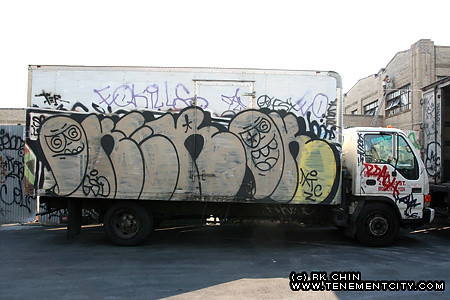
The first and most identifiable form of graffiti is known as "tags" or also as "handstyles". This form is used by almost every graffiti artists. (Even those who some would classify as great artists - note the REKA tag at the bottom of the door)


Throwies or throw ups are the next along, usually eye catching and quickly done which gives most an abrasive look.


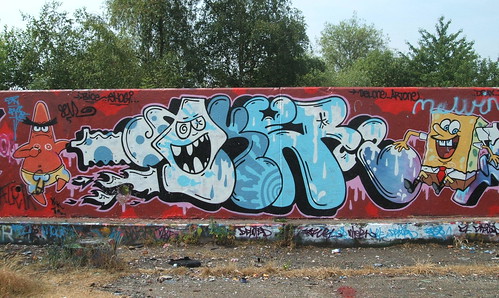
The next along are pieces. Pieces usually consist of 3 or more colours and backgrounds and are carefully done to make as perfect as possible to the sketch or idea they have in their head.


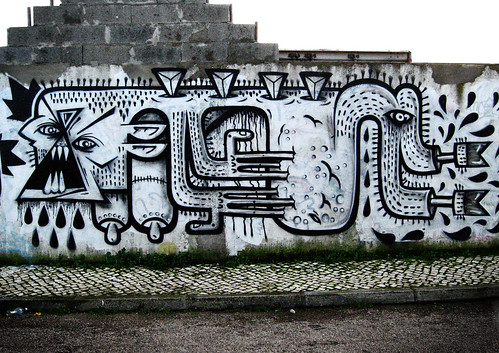
Characters


Installations


Everyones favorite graffiti artists Banksy the stencil artists


pastes up - REKA


"Wash your brain from brain washing - Okies"


Messages